When we talk about assistive technology in education, it’s easy to picture high-tech gadgets or expensive tools. But in real SEND classrooms, assistive technology isn’t about flash. It’s about access.
At Sense Education, we believe meaningful inclusion starts with removing barriers, not expecting pupils to fit into a one-size-fits-all approach. Over the summer, we shared examples of how different forms of assistive technology are used in real settings to support communication, independence and connection.
What Counts as Assistive Technology?
Assistive technology includes any tool that helps a pupil access learning, communicate, regulate or take part in school life in a way that works for them.
It might be:
- A cochlear implant that helps a child access sound
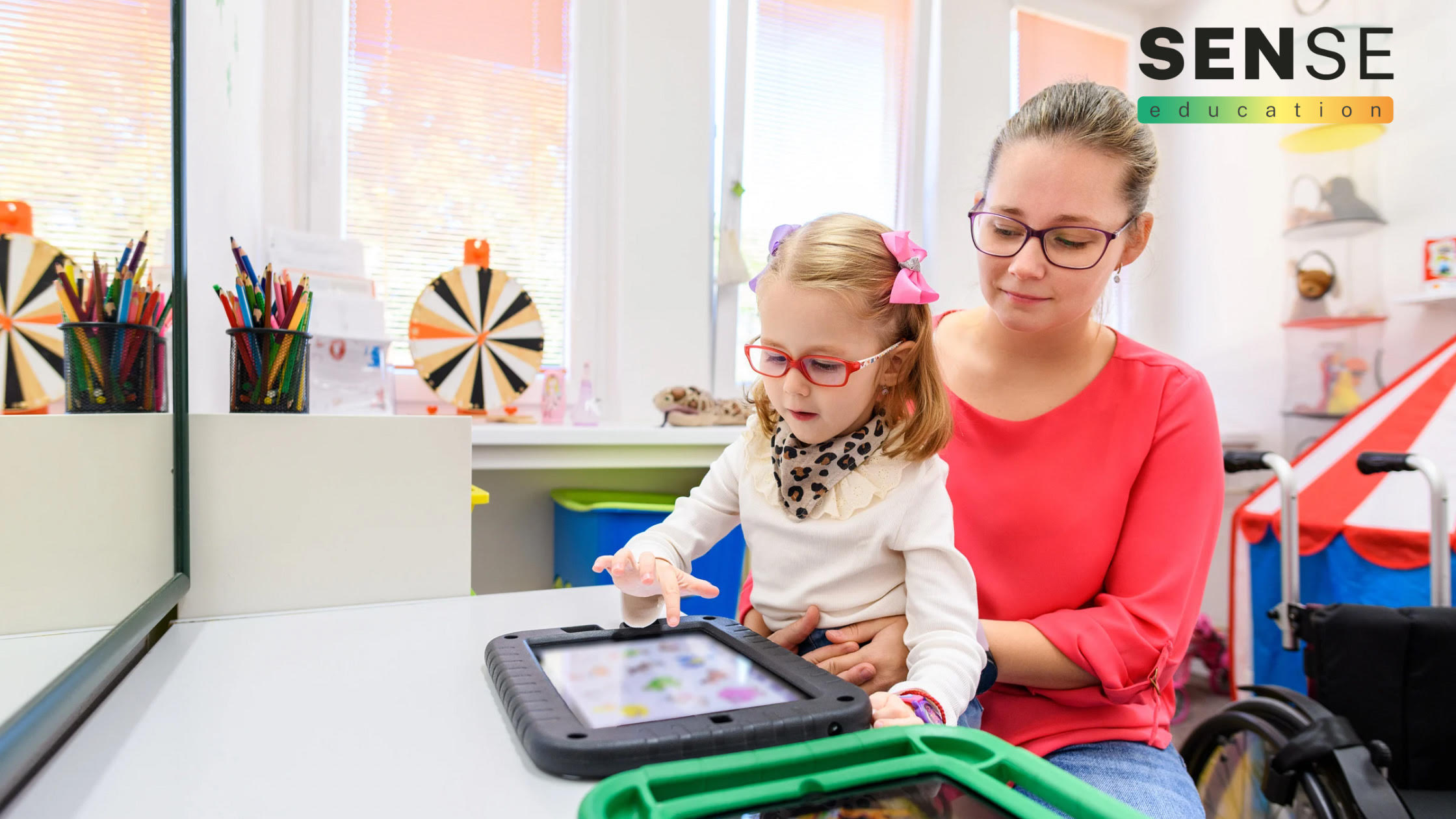
- An iPad app that gives a non-speaking pupil a voice
- A dictation tool that helps a child with dyslexia express their ideas
- Eye gaze technology that allows a pupil to make choices using only their eyes
And sometimes, it’s lower tech: a visual timer, a sloped writing board, a now/next strip. All of it matters.
Why It Matters
Assistive technology isn’t about changing who a child is. It’s about removing barriers so they can thrive in a way that’s right for them.
The right tool can reduce anxiety, boost confidence and create opportunities for connection. It gives pupils more than access to the curriculum. It is inclusion and belonging.
What We Shared
Here are four examples of assistive technology we explored on our Instagram page:
- Cochlear implants: What they are, what they’re not, and how they support inclusion
- AAC on iPads: How speech-generating apps give pupils the power to express themselves
- Eye gaze technology: For children with limited movement, this can unlock communication and choice
- Dictation tools: Making writing more accessible for pupils with dyslexia, ADHD or motor challenges
Each post aimed to raise awareness and spark conversation around what meaningful support can look like.
Final Thoughts
There’s no single piece of technology that works for every child. But with the right tools and a team who takes time to understand individual needs, we can help pupils feel heard, included and capable.
Because assistive technology isn’t just about devices. It’s about dignity, access and understanding.
Follow Us on Instagram
#SenseEducation #AssistiveTechnology #SENDsupport #InclusiveEducation